Homeschooling in India, without the confusion.
We homeschool our own two kids in Sagar, MP. Everything we have learned is here: free videos, a ₹199 starter guide, a monthly learning plan, hands-on kits, and 1:1 help when you are stuck.
250K+
parent community
(204K on Instagram)
5,000+
parents guided
100s
of parent workshops
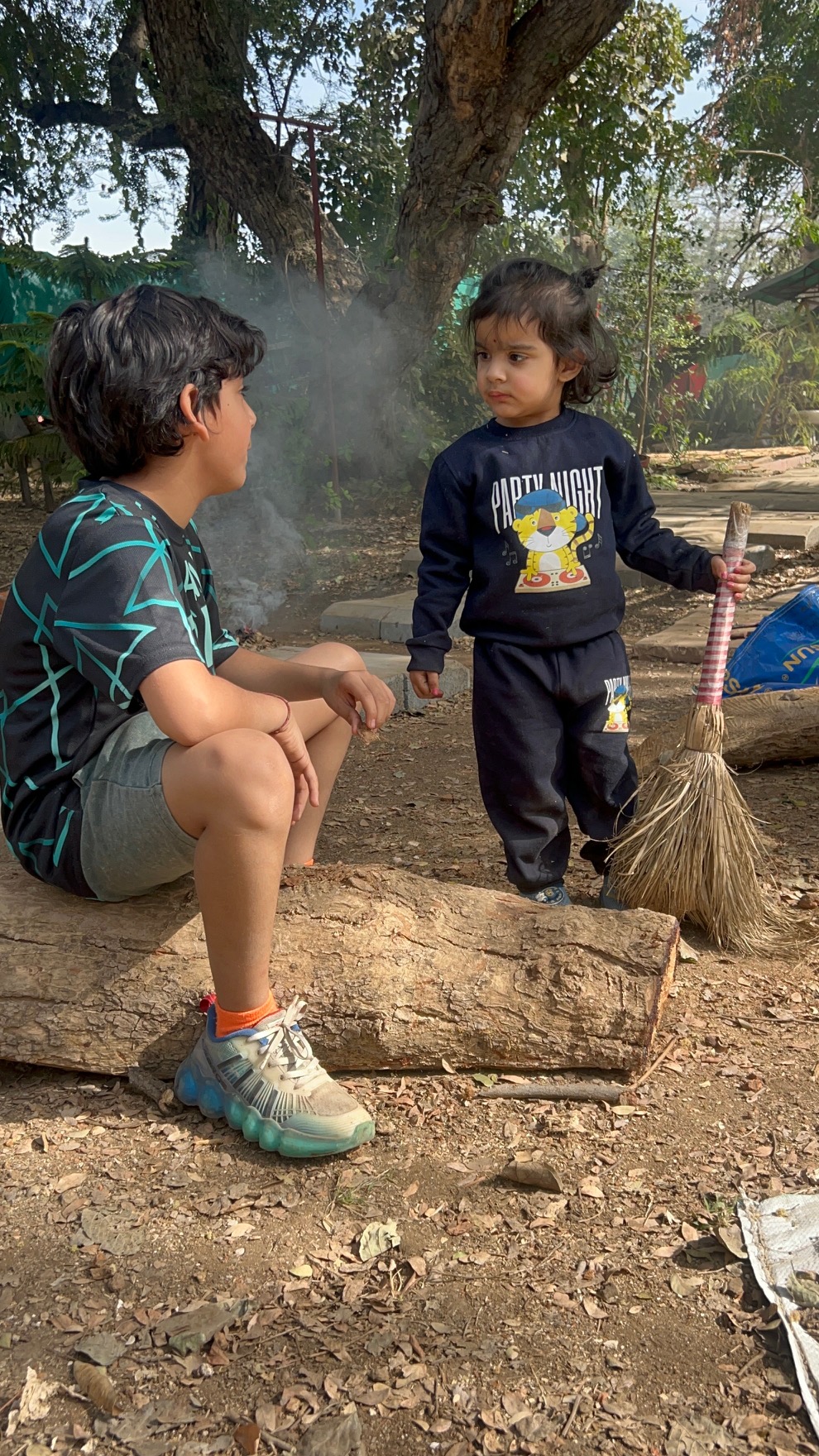
“The world is our classroom.”
— Aarit & Anaya
Three steps. Go only as far as you need.
Most parents get their answer in step 1 or 2. If you still feel stuck, talk to Ritesh directly.
Watch the basics
Is it legal? What about NIOS and exams? How does a normal day look? Our YouTube videos answer the questions every parent asks first.
Watch on YouTuberead before you decide
How to Start Homeschooling in India
RITESH BAJAJ
5,000+ parents guidedRead the starter guide
How to Start Homeschooling in India: the legal side, board options, a first-month plan and the mistakes we made. Read it before you pull your child out of school.
Get the guide · ₹199Talk to Ritesh 1:1
Up to one hour, just about your family. We check honestly if homeschooling fits you, and if it does, we craft the plan for how it will work in your home.
Book a call · ₹999What we offer
Free videos
Honest answers on NIOS, the legal side, daily routines and what homeschooling really takes.
Starter ebook
How to Start Homeschooling in India. Everything for your first month in one guide.
1:1 clarity call
Up to an hour on your family: is homeschooling right for you, and how to make it work at home.
Monthly learning plan
Weekly assignments and learning ideas, with a full plan for the month. See the difference every quarter.
30 Doors
Find your child’s interests and learning archetype through 30 hands-on assignments.
Learning kits
Real-world investigations that mix science, maths, languages and money skills.
Live workshops
Hundreds done so far. Small group sessions for parents, with live Q&A.
Free parent tools
Bedtime stories, talk prompts and drawing games that work on your phone.
No two children light up the same way. Do you know what lights up yours?
Some children are endlessly curious. Some disappear into blocks for hours, some into RC cars, some into paint. 30 Doors is 30 hands-on assignments, one door at a time. By the last door you will know which of the 10 learning archetypes your child leans towards, and how to build their learning around it.
INDIA’S NATIONAL EDUCATION POLICY 2020
Its first guiding principle: recognise, identify and foster the unique capabilities of each child, and it asks parents to do this too, not only teachers.
WHAT RESEARCH ON INTEREST SHOWS
Even a little interest improves a child’s attention, memory and motivation. But a spark of interest can fade if nobody notices it and feeds it.
tap a door to peek inside ↓
What is a learning archetype?
A simple map of what lights your child up right now: the kinds of activities that make them pay attention, keep going, and ask for more. It helps you choose what to offer next.
What it is not
Not a label and not a fixed “learning style”. The idea that children only learn well in one style has been tested and does not hold up. Children need many kinds of experiences; archetypes just show you where to start.
Why find it early
Interest grows when it is noticed and fed, again and again. Most children are a mix of two or three archetypes, and the mix changes as they grow, so we look again every few months.
ARCHETYPE
YOU MAY NOTICE
THEY COME ALIVE WHEN
Tap any door to see what that archetype looks like at home. Sound like your child? That is exactly what 30 Doors helps you find out for sure.
A whole month, planned for you. Every month.
Every week you get new assignments and simple ideas for how your child can learn different things. Follow the month’s setup plan, and at the end of each quarter, look back and see how much has changed.
One real-life question. Every subject inside it.
Each kit is a 20+ page investigation built for our son Aarit. On “How does electricity reach my house?” a child does science, maths, English writing, Hindi, money skills and a hands-on activity, all in one story.
Each kit has a student workbook, parent guide, answer key, a “watch Aarit do it” video and a certificate.
Browse kits · from ₹[PRICE]5 minutes of real connection, on your phone.
Bedtime Story Studio
A story made with your child’s name in it, ready in seconds.
Talk Time
One question a day that gets kids talking at the dinner table.
Why? Questions
100+ questions that turn car rides into curiosity.
Draw Together
Five-minute drawing prompts. No rules, no grades.

“Children don’t fail systems. Systems fail children.”
I’m Ritesh. After 15+ years in IT, I became a full-time homeschooling dad. Through hundreds of workshops I have guided more than 5,000 parents. At home, my wife Akansha and I learn alongside Aarit and Anaya every day, and we share all of it, the wins and the messy days, so you don’t have to figure it out alone.
You are not the only homeschooling family in your city.
Find families near you, plan meetups, swap books and kits on the give-and-take board, and ask questions to parents who have been there.
Get the free Homeschool Starter Checklist
A one-page checklist for your first 7 days, sent straight to your WhatsApp.
Parents usually ask
Is homeschooling legal in India?
No law in India bans homeschooling, and no law formally recognises it either. The Right to Education Act (2009) makes school admission for children aged 6 to 14 a parent’s duty, but it sets no penalty. In 2012 the education ministry told the Delhi High Court that families who choose homeschooling may continue; the government later changed that stand, and in 2013 the court closed the case without ruling on homeschooling. So it is a grey area, not a banned one, and many Indian families homeschool openly. Our blog post on the legal side walks you through it.
What about board exams and certificates?
Most homeschooling families use NIOS, the government’s open-schooling board. For the Secondary (Class 10) course a child must be at least 14, and a child with no formal schooling can apply with a self-certificate. The Senior Secondary (Class 12) course needs age 15 and a Class 10 pass. For younger children, NIOS Open Basic Education levels A, B and C are equivalent to Classes 3, 5 and 8 and run through accredited agencies. NIOS certificates are recognised for higher education and government jobs.
Do I need to be a teacher to homeschool?
No. Indian law asks for no teaching qualification from homeschooling parents. What your child needs from you is time, attention to how they learn, and the right resources. Your job is to guide; the child does the exploring. That is exactly what our 30 Doors, monthly plan and kits are built to help with.
What happens on the 1:1 call?
It is a focused session of up to one hour. We go through the questions specific to your family, check honestly whether homeschooling is right for your child and your situation, and if it is, we work out how to craft the plan in your home. You leave with clear next steps.
How is the monthly plan different from the kits?
A kit is one deep investigation you buy once. The monthly plan is a subscription: every week you get new assignments and learning ideas, with a set-up plan for the whole month, so you never sit wondering what to do next. Every quarter you can look back and see the difference.
Rules and NIOS criteria change from time to time. Always confirm on nios.ac.in before you apply.
Namaste! Main Ritesh. Kahin bhi mouse le jaiye, main samjhata hoon.